Key Takeaway
- Before starting any acne scar treatment in Singapore, it helps to know whether you’re dealing with a mark or a true scar. They look similar but respond to very different things.
- Marks are flat colour changes on the surface. They’re temporary, and they can fade.
- Scars form when the skin’s underlying structure changes. They don’t fade the same way, and they need more targeted help.
- You can do a quick press test at home to start narrowing it down.
- If you’re not sure, a proper skin assessment before any acne scar treatment in Singapore can save you a lot of time and keep you from going in the wrong direction.
Introduction
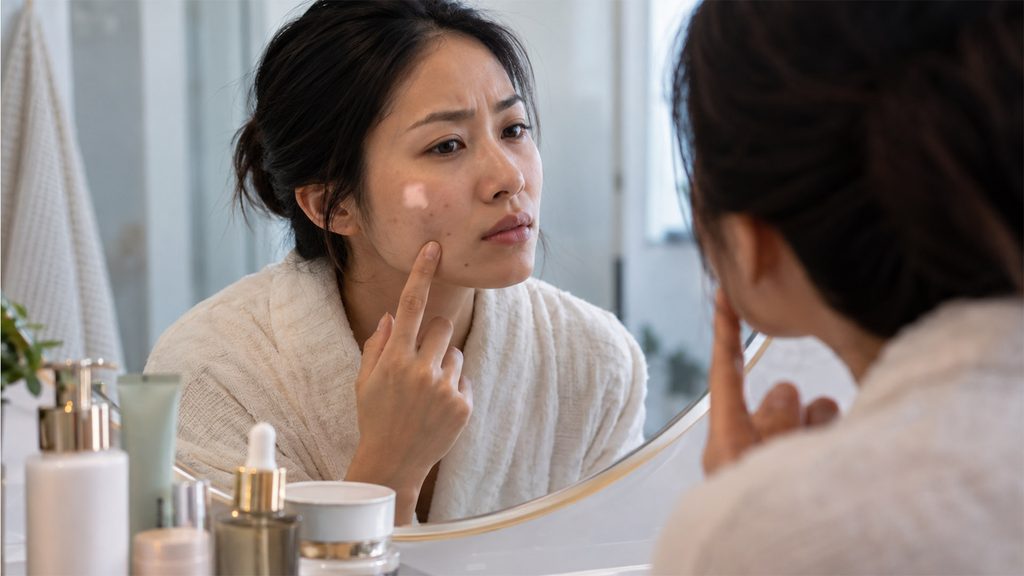
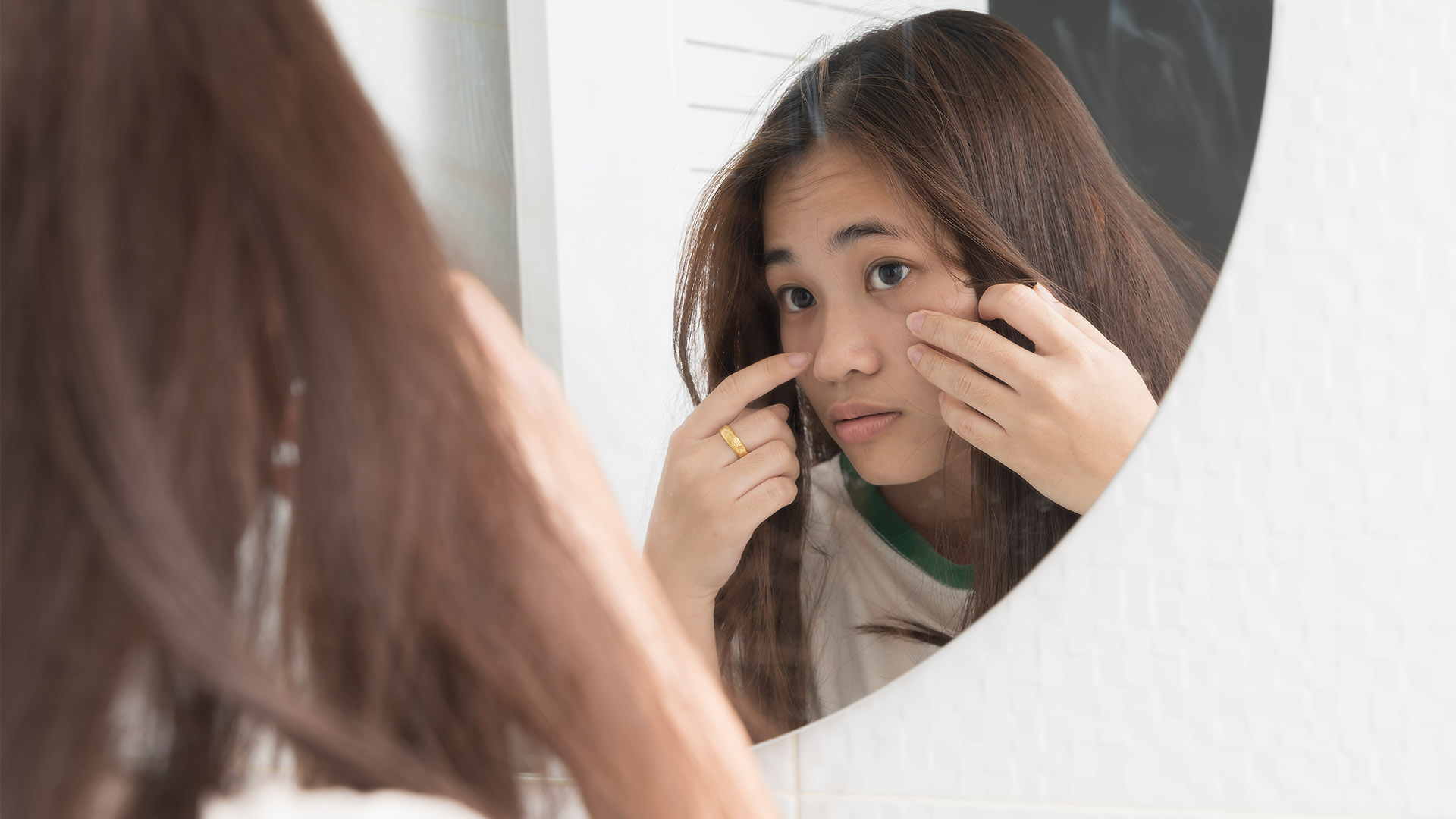
Here’s something that happens a lot. A breakout clears up, and you’re left with what looks like damage. A flat brown patch. A small dip that catches the light at a certain angle. A red mark that’s been hanging around for three months with no signs of leaving. So you call it all “scarring” and start trying things.
The frustrating part? A lot of that effort ends up aimed at the wrong problem. Whether your skin needs brightening or something that works deeper down depends on what’s actually happening beneath that discolouration. And those are two very different things.
So before you book anything or try another product, it really helps to know which one you’re actually dealing with.
Wait, Aren’t All Post-Acne Treatments the Same?
Not even close. Brightening serums, laser sessions, chemical peels, resurfacing treatments: they all get lumped under “post-acne treatment,” which is part of why people end up doing the wrong one for months.
The short of it is that marks are flat colour changes sitting on the surface, while scars go deeper and actually change the skin’s structure underneath. That pitting, those small depressions, the raised ridges? They happen when a deep breakout disrupts the skin’s collagen underneath. Knowing which one you have is what actually changes your treatment path.
What Are Acne Marks, and What Causes Them?
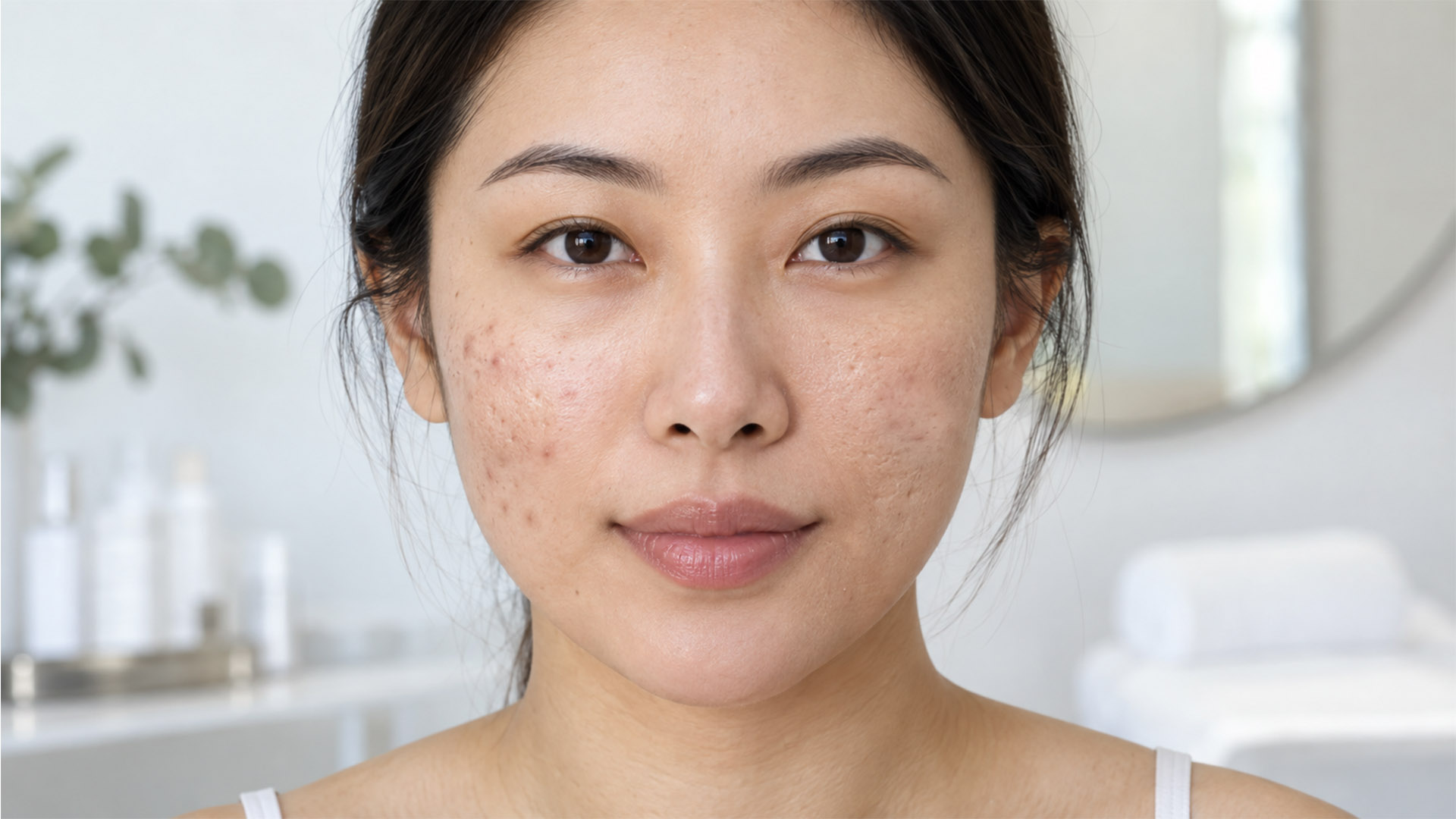
An acne mark is a flat colour change. Run your finger over it and the skin feels smooth: no dip, no bump, nothing. What you’re seeing is just a colour shift from the inflammation your skin went through.
There are two types worth knowing about. PIH, or post-inflammatory hyperpigmentation, shows up as brown, tan, or grey flat spots after breakouts. When your skin gets inflamed, it sometimes overproduces melanin (the pigment that gives skin its colour) in that spot. That excess sticks around even after the breakout clears. PIH tends to show up more visibly on medium to deeper skin tones.
PIE, or post-inflammatory erythema, shows up as flat red or pink marks instead. These happen when inflammation damages tiny blood vessels just under the skin surface. The redness they leave behind can sit there for months, even though the spot itself is long gone.
Both are temporary. Neither is a scar. If your finger runs smoothly over the area, you’re almost certainly dealing with a mark.
Here’s a quick check you can do at home: press firmly on a red mark for a few seconds. If the colour briefly turns white, that’s likely PIE (blood vessels responding to pressure). If it stays, you’re probably looking at PIH or something worth getting properly assessed.
What Are Acne Scars, and How Are They Different?
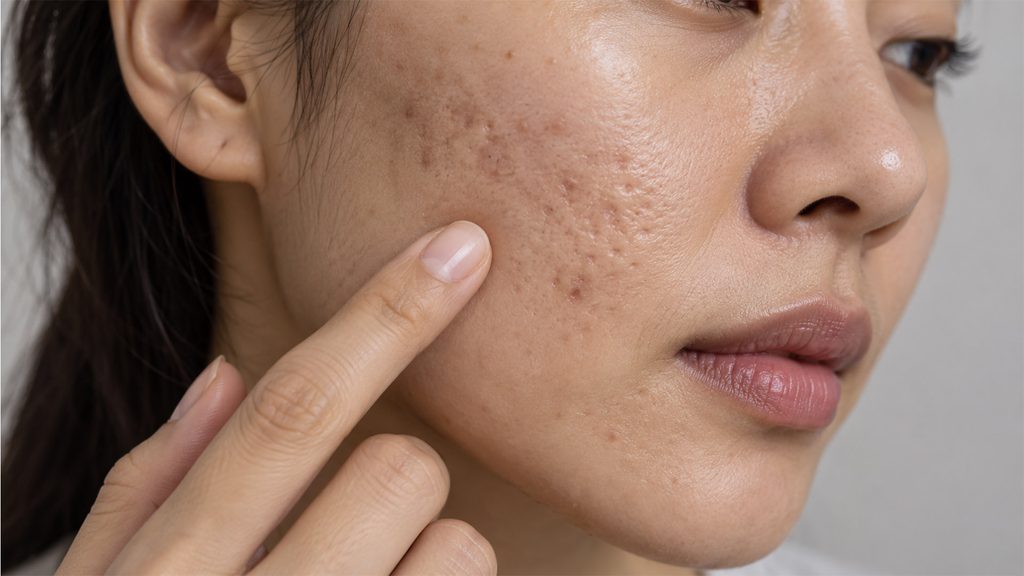
Acne scars happen when a breakout goes deep enough to damage the skin’s collagen: the protein that keeps skin firm and even. The big, painful kind, the cysts and nodules that sit underneath the skin, are the ones most likely to cause this. When they heal, the skin tries to repair itself but doesn’t always get the balance right. Too little collagen and you get a depression. Too much, and you get raised tissue.
The easiest way to tell them apart is by touch. Marks feel smooth, the same as the surrounding skin. Scars feel different: a small indent, a rougher patch, a slight ridge you can actually feel under your fingertip.
Scars that leave depressions in the skin are quite common. You might’ve heard the terms: icepick scars (narrow and quite deep), boxcar scars (wider, more defined edges), rolling scars (slightly uneven, wavy surface). Raised scars, where tissue builds up above skin level, are less common but do happen.
Unlike marks, these don’t fade on their own. Research shows that acne scars rarely go away completely without some kind of treatment, even if they can soften slightly over time.
Texture is really your clearest clue here. Colour alone won’t tell you enough.
Why Does This Actually Matter for Your Treatment?
| Acne Marks (PIH / PIE) | Acne Scars | |
| What causes it | Excess melanin or damaged blood vessels | Disrupted collagen from deep inflammation |
| How it feels | Smooth, no texture change | Depressed, raised, or uneven |
| Does it fade | Yes, over time | Rarely without treatment |
| What treatment does | Fades pigment or calms redness | Rebuilds collagen or resurfaces skin |
If you’ve been targeting pigmentation for months and nothing’s shifting, it’s worth asking whether you’re actually dealing with shallow scarring. If you’ve got persistent red marks that won’t budge, they might be PIE rather than pigmentation, and those respond to different things. Getting this right saves a lot of time and money when it comes to any kind of acne treatment in Singapore.
Which Treatments Suit Marks, and Which Suit Scars?
For flat discolouration from PIH or PIE, you’re looking at treatments that may help fade pigment or calm redness at the skin’s surface. Professional pigmentation treatment in Singapore uses light-based technology to target the colour where it sits and help the skin tone out more evenly over time. Sun protection is really important alongside this too; UV exposure makes PIH darker and much slower to fade.
For actual scarring, it’s a different conversation. Professional acne scar treatment in Singapore works at a level that topical skincare simply can’t reach.
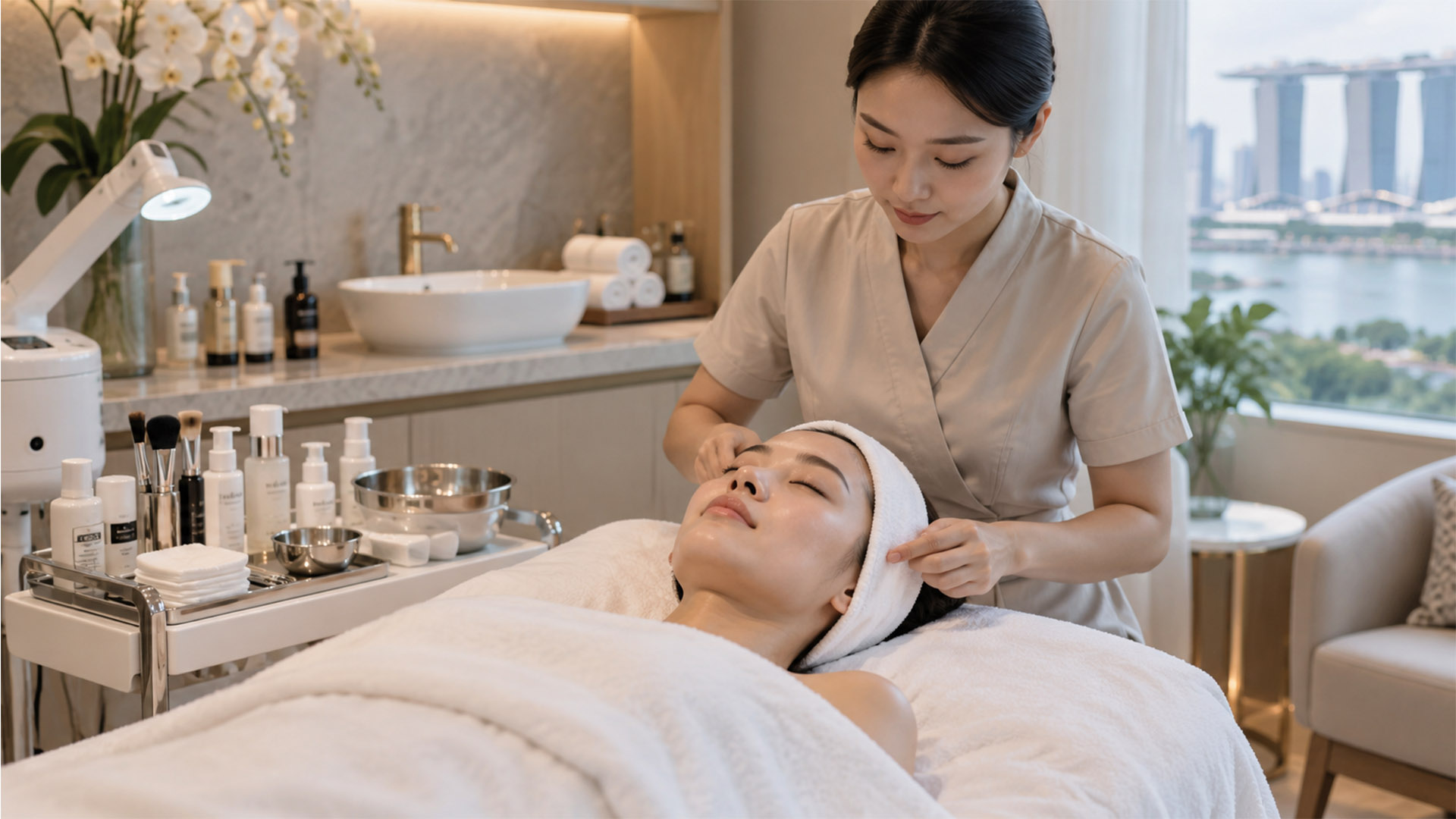
TaraBliss approaches both depending on what your skin is actually dealing with, and choosing the right acne scar treatment in Singapore starts with knowing which applies to you. The Sensitive, Maskne & Acne Facial uses hyperbaric oxygen infusion to calm inflammation and support your skin’s barrier, helping create the right conditions for marks to fade. For pigmentation, uneven tone, and post-acne discolouration, the Glow Glass Skin Facial uses NIR and OPT technology to target pigment, support collagen, and improve skin texture. Every session starts with a detailed skin analysis, so the treatment is built around what your skin is actually doing, not just what it looks like on the surface.
This TaraBliss guide on acne covers the main treatment options for acne-prone skin if you want to go deeper.
So, What Do I Actually Have?
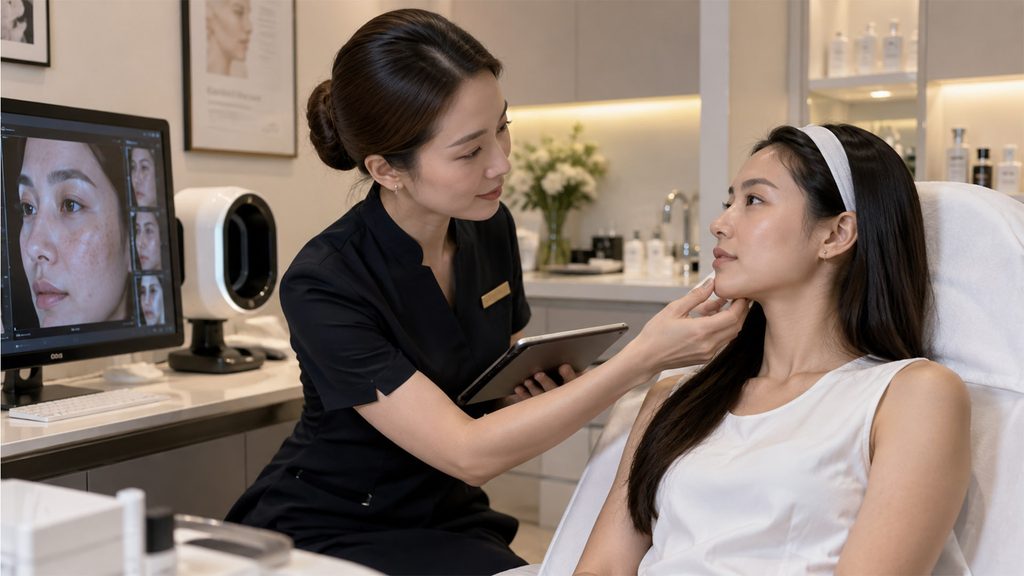
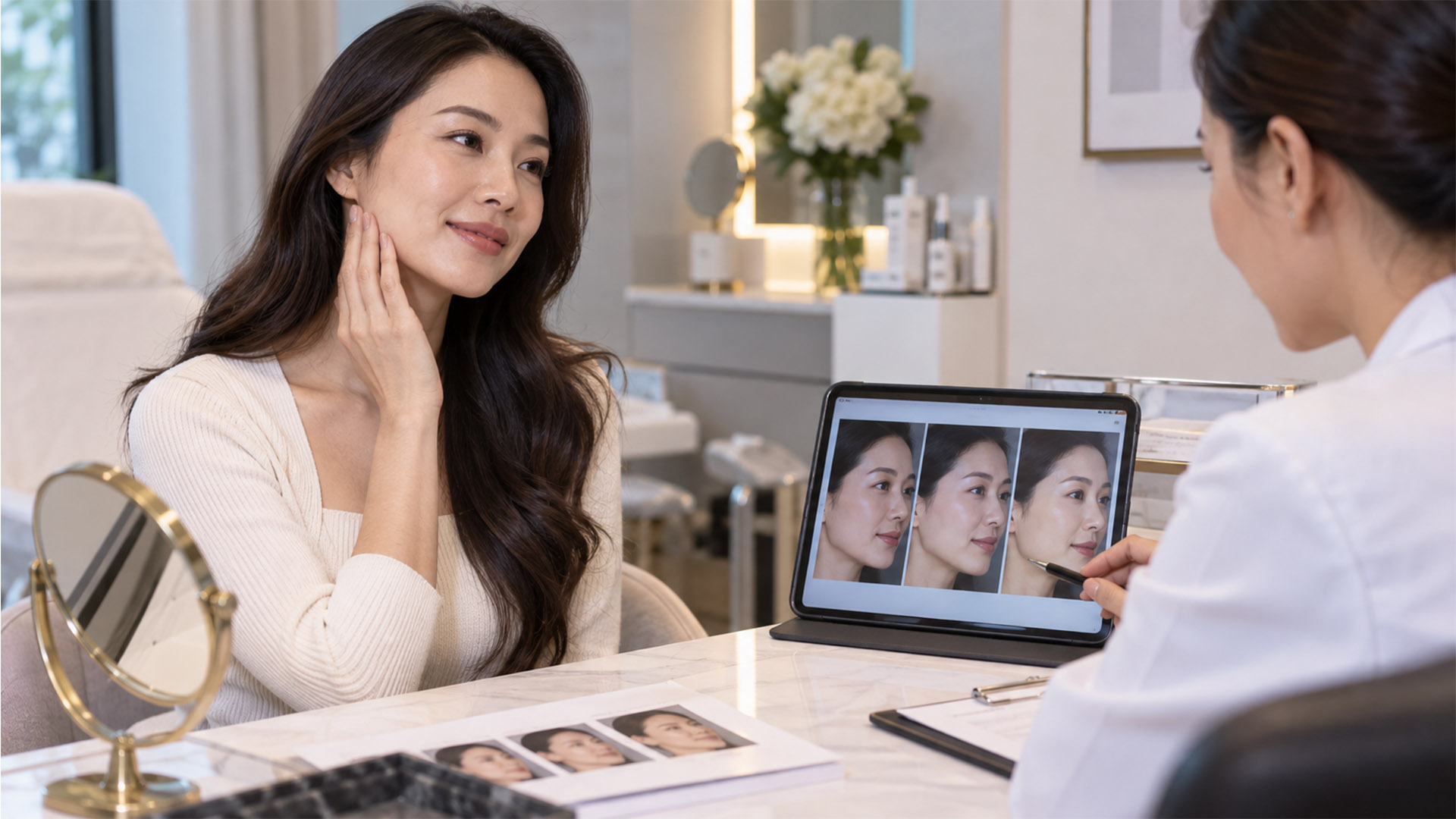
If you’ve read through and you’re still not sure, that’s genuinely what the skin assessment at TaraBliss is for. Your therapist can map what’s actually going on before any treatment is recommended, especially if you’re thinking about acne scar treatment in Singapore.
Frequently Asked Questions
1. Can I have both marks and scars from the same breakout?
Yes, very easily. A shallow pimple might leave a flat dark mark, while a deeper spot in the same area can leave a small depression. If you’ve had frequent breakouts over time, you’re likely dealing with a mix of PIH, PIE, and actual scarring all at once. A proper skin assessment maps what’s what so your treatment actually targets the right thing.
2. Does picking at spots make it worse?
Yes. Squeezing or picking pushes the inflammation deeper, which raises the chance of collagen damage and scarring. It also worsens PIH because the extra trauma triggers more pigment production.
3. How long do acne marks take to fade?
PIH can take anything from a few months to over a year, depending on your skin tone, sun exposure, and how severe the original inflammation was. PIE often fades a bit faster, but it can still hang around for months. Not protecting your skin from the sun is one of the biggest things that slows the whole process down.
4. Is acne scar treatment in Singapore suitable for all skin tones?
The right approach depends on the specific treatment, not just skin tone. Some energy-based treatments need careful calibration on darker skin tones to avoid triggering extra pigmentation, so a proper assessment before any pigmentation treatment in Singapore matters.
Marks and scars can look the same in the mirror, but they respond to different things. The step that tends to get skipped is figuring out which one you’re actually dealing with before anything else. Whether you’re looking at post-acne mark care or something more targeted for acne scar treatment in Singapore, TaraBliss’s skin consultation gives you that clarity first. Book a session and let a therapist take a proper look.