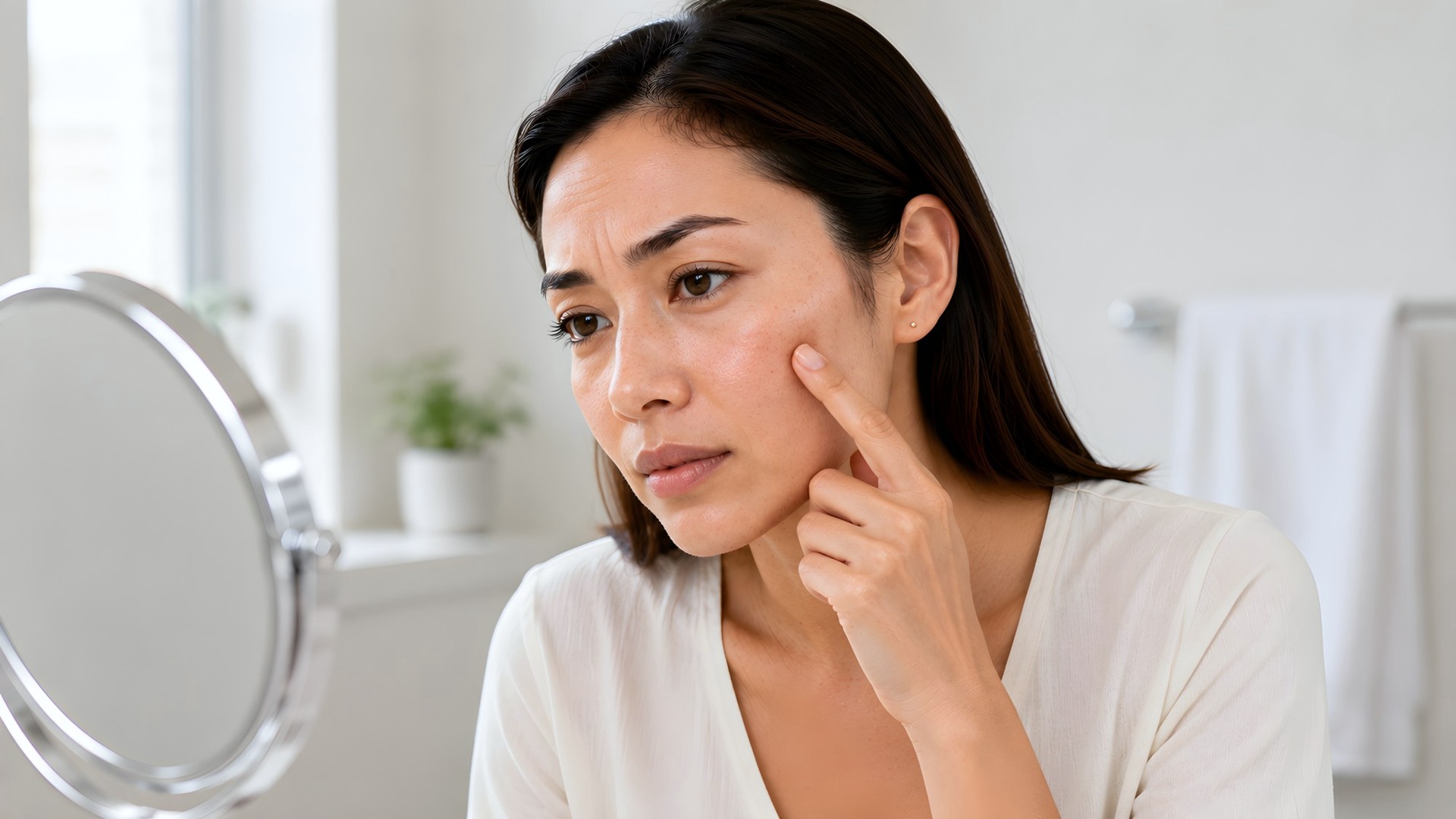

The frustrating part of pigmentation is often not seeing a mark for the first time. It is watching it fade, feeling hopeful, and then noticing it again. Before trying a stronger treatment, find out whether you are looking at the same patch or a new mark.
Key Takeaways
- Melasma can become more visible again after it has faded. A plan needs to account for ongoing light exposure and other triggers.
- A new mark after a breakout is different from the return of an old patch. Treating both as “pigmentation” can lead to the wrong conversation.
- Singapore’s UV levels make everyday sun protection relevant even between appointments.
- A new, changing or bleeding spot needs medical assessment before any brightening facial.
You have been careful with your skincare. The patch across your cheek looked lighter for a while. Then, in the bathroom mirror, it seems to have returned. It is tempting to think the treatment failed and that the next one must be stronger.
Pause at the pattern. Is it exactly the same patch? Did a new blemish leave a mark nearby? Has the colour changed after time outdoors? Those details can tell a dermatologist or therapist far more than the word “pigmentation” alone. A mark can fade without the tendency behind it disappearing.
A quick guide to returning dark marks
| Pattern you notice | One possibility | Next step |
| Mark after a breakout | Post-inflammatory pigmentation | Reduce irritation and discuss the mark |
| Broader symmetrical patches | Melasma | Seek a qualified assessment |
| A new or changing spot | Cause uncertain | Arrange a medical check |
Is the same mark coming back?
Melasma often appears as broader patches on the cheeks, forehead or upper lip. Light and hormones can influence it, and improvement may need ongoing maintenance. Sengkang General Hospital’s melasma guidance describes its presentation and the possibility of recurrence. A darker patch after a sunny period is a reason to reassess the plan, not proof that one more aggressive facial will settle it for good.
A spot left where a pimple healed tells another story. NHG Health describes post-inflammatory pigmentation as a mark after skin inflammation. If new acne or irritation keeps appearing, new marks may appear too, even while an older one fades. The underlying breakout deserves attention alongside the visible colour.
A small, distinct spot on sun-exposed skin may have a different explanation again. You cannot reliably identify every mark from a photograph or a quick glance. If a spot is new, changing in shape or colour, bleeding or simply worrying you, see a clinician before treating it as a cosmetic concern.
Why does sun protection matter after a treatment?

A brightening appointment does not give your face immunity from sunlight. Singapore’s National Environment Agency notes that UV levels can be very high or extreme around midday on clear days. Exposure during ordinary errands can be relevant, especially when melasma is part of the picture.
Make protection practical. Choose sunscreen you can wear regularly and reapply when your day calls for it. Seek shade or use a hat when you will be outside longer. If a clinician has prescribed pigmentation treatment, follow their advice about products and sun protection. Stacking several strong brightening ingredients because a patch reappeared can leave your skin irritated and make the decision harder.
Your daily route matters more than an idealised routine. A short walk to lunch, an outdoor school pickup and a weekend by the water are different kinds of exposure. Plan for the day you actually have, without treating every minute outdoors as a personal mistake.
When should you try another facial?
First ask what kind of mark you have and what the proposed session is meant to change. A facial for general radiance may make your complexion look fresher. A persistent or recurrent melasma patch may need a dermatologist’s assessment and a longer-term plan. Those can be complementary conversations, but they are not interchangeable promises.
TaraBliss’s Glow Glass Skin Facial includes a personalised skin assessment and cosmetic steps. Ask which parts suit your skin and what results are reasonable. The service name does not establish that it will permanently clear melasma or identify a suspicious spot. If your skin reacts easily, bring up past irritation before exfoliation or light-based steps are suggested.
A useful consultation should leave you knowing what to watch. What would count as progress? What could cause the mark to look darker again? When should you seek medical advice rather than repeating a facial? You need those answers before you commit to a course of appointments.
How can you tell whether a plan is working?

Look beyond one flattering photograph taken immediately after treatment. If you want to track a patch, take occasional pictures in similar lighting and note whether it is the same area. Bring them to a qualified assessment, especially if the pattern changes. A gradual improvement may be meaningful even when it is not permanent. Ask the provider to define what they expect to change after a session and when you should judge it. A photograph taken straight afterwards may show a fresh finish without telling you how the patch will look weeks later.
There is room to be disappointed when a mark returns. It does not mean you were careless or that your skin is impossible to treat. Pigmentation has several causes, and some forms need long-term management. Understanding the kind of mark gives you a better basis for the next decision than simply increasing the strength of what you used last time.
What else can make a patch look darker again?
A mark may be more noticeable after sun exposure, but the story does not end at the UV index. A new breakout can leave a new mark beside an old one. A product that irritates your skin can complicate the picture. Hormonal factors may remain relevant to melasma even when your skincare is consistent. These are reasons to describe the pattern carefully, not reasons to blame yourself for it.
Think back to the days before you noticed the change. Was the patch already there but fainter? Did you introduce a strong exfoliant? Have you been treating an active breakout? Share those details at an assessment. A provider who listens to the history can tell you whether the next step is cosmetic care, a change in routine or a dermatologist’s opinion.
The word “recurrence” can sound as if the previous treatment was pointless. Sometimes the earlier improvement was real, and ongoing triggers made the mark visible again. A long-term plan may be less dramatic than a one-time fix, but it gives you a more honest way to judge progress.
Frequently Asked Questions

Can melasma return after it fades?
Yes. Light and hormonal factors can continue to influence it. Ask a dermatologist how maintenance fits your circumstances rather than expecting a permanent result from one session.
Is a new dark mark always melasma?
No. A mark after a breakout, a sun spot and melasma have different histories. A clinician can assess a mark that is uncertain or changing.
Should I use stronger exfoliation when a patch returns?
Not automatically. Irritation may make matters worse. Have the mark assessed and ask whether your current routine and sun protection need adjustment.
Can a facial prevent all future dark spots?
No. A facial may improve cosmetic appearance, but future pigmentation can be influenced by ongoing light exposure, hormones or inflammation.
When is a dark spot a medical concern?
Seek medical advice if it is new, changing, bleeding or otherwise worrying. Do not assume every pigmented spot is suitable for a brightening treatment.
Look at the pattern before repeating the treatment
If a patch has returned, begin with its story rather than a stronger product. Keep sun protection workable in your Singapore day and ask for an assessment where needed. If a cosmetic facial fits your concern, explore TaraBliss’s Glow Glass Skin Facial with realistic expectations. For an uncertain or concerning spot, see a clinician first.