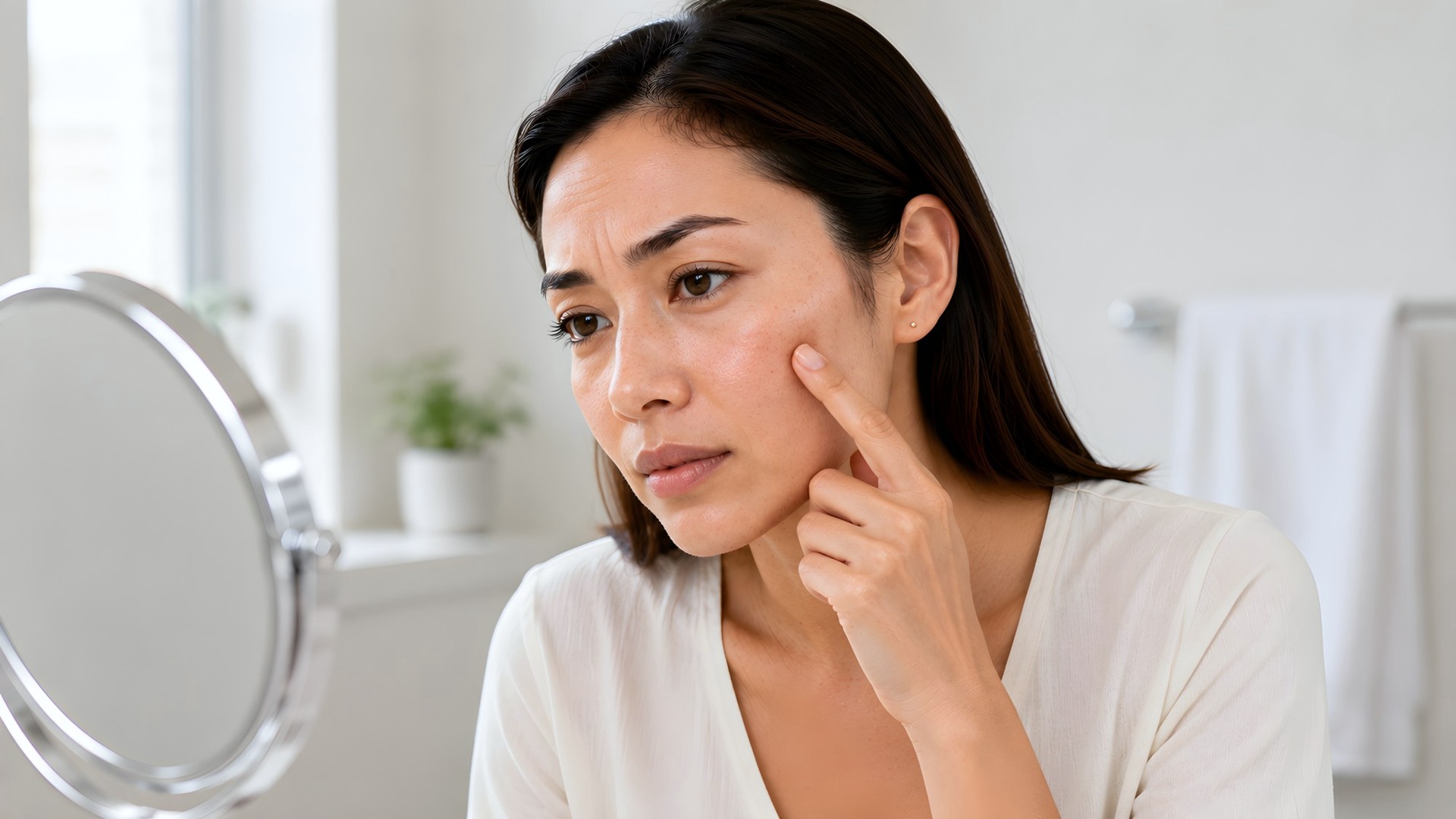

“Pigmentation” sounds like one problem. In the mirror, it can be several: a soft-edged patch across your cheeks, a neat little spot near your temple, or a mark left by a breakout. Knowing which you are dealing with changes the conversation about treatment.
Key Takeaways
- A broad patch, a small defined sun spot and a mark after acne can have different causes, even when all look brown.
- The pattern and history of a mark are clues, not a home diagnosis. Ask for a proper assessment before choosing a stronger treatment.
- If new breakouts keep leaving marks, address the acne as well as the old pigmentation.
- A cosmetic facial can focus on appearance; a new or changing spot should be checked medically first.
You have probably seen the phrase “uneven skin tone” on more bottles than you can count. It sounds manageable: add a brightening serum, book a facial, wait for a more even complexion. But what if the patches on your cheeks and the tiny spot beside your eye are not the same kind of mark?
This is where beauty advice can get too simple. CNA Lifestyle’s interview with Singapore dermatologists explains that melasma can overlap with age spots and post-inflammatory pigmentation. You may have more than one type at once. Before asking which treatment is “best for pigmentation”, it is worth asking what the pigmentation actually is.
A quick guide to common-looking marks
| What you see | One possible explanation | Useful next step |
| Broad patches across cheeks | Melasma can have light and hormonal triggers | Ask for an assessment of the pattern |
| Small defined brown spots | Sun spots may reflect accumulated exposure | Check the type before choosing treatment |
| Mark after a blemish | Post-inflammatory pigmentation | Address continuing inflammation too |
Could the patch on your cheeks be melasma?
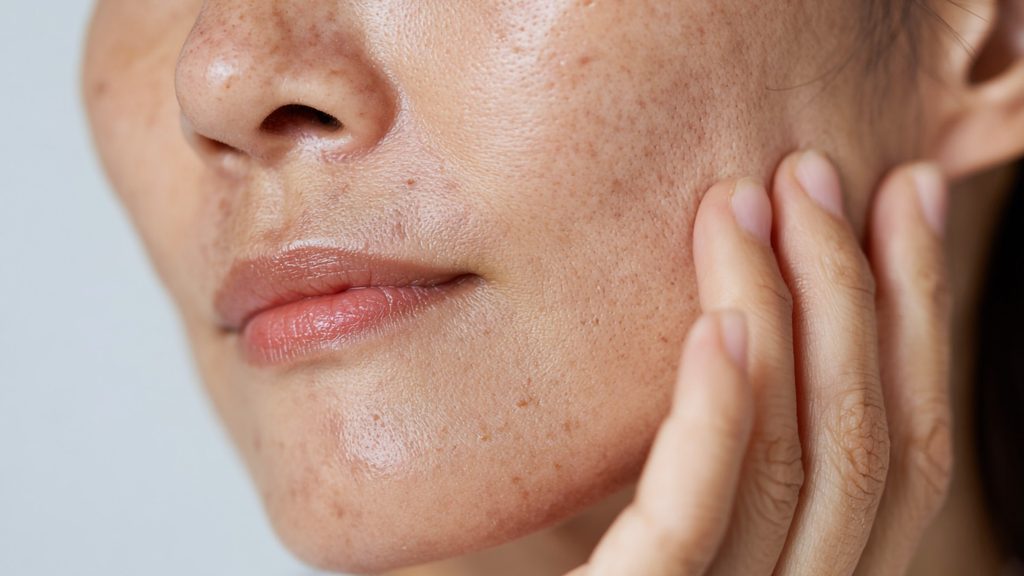
Melasma often shows up as broader, sometimes symmetrical patches on the cheeks, forehead or upper lip. Hormonal factors and light exposure can influence it. That does not mean every patch in those areas is melasma, or that you can diagnose it from a photograph taken in bathroom lighting.
The patch’s history matters. Has it been there through a pregnancy or hormonal change? Does it become more visible after sun exposure? Has it faded and returned? Tell a dermatologist what you have noticed. A treatment plan for melasma may involve ongoing management rather than the promise of one decisive session.
A cosmetic therapist can discuss the look of your skin and what a facial includes. If the diagnosis is uncertain, or a patch is changing in an unusual way, a clinician should assess it. That is a more thoughtful response than treating every brown area with the same product.
What makes a sun spot or post-acne mark different?
A sun spot tends to be smaller and more clearly defined. Its relationship with cumulative sun exposure is different from the hormonal story that can be part of melasma. The name “age spot” can make it sound as though turning a certain age caused it, when light exposure is central to the discussion.
A mark after a pimple or an eczema flare has a more recent story. Singapore dermatology reporting distinguishes these marks and advises addressing the inflammation behind them. If your chin is still breaking out, the next mark may be forming while you are trying to fade the last one. The acne or irritation needs attention too.
Then there is “dullness”, which may not be a distinct pigmented spot at all. You may simply feel that your complexion looks tired or less even. That can be a perfectly good reason to ask about a facial, but it is a different goal from medically treating melasma. Tell the provider which detail you actually want to change.
How does an assessment lead to a better choice?

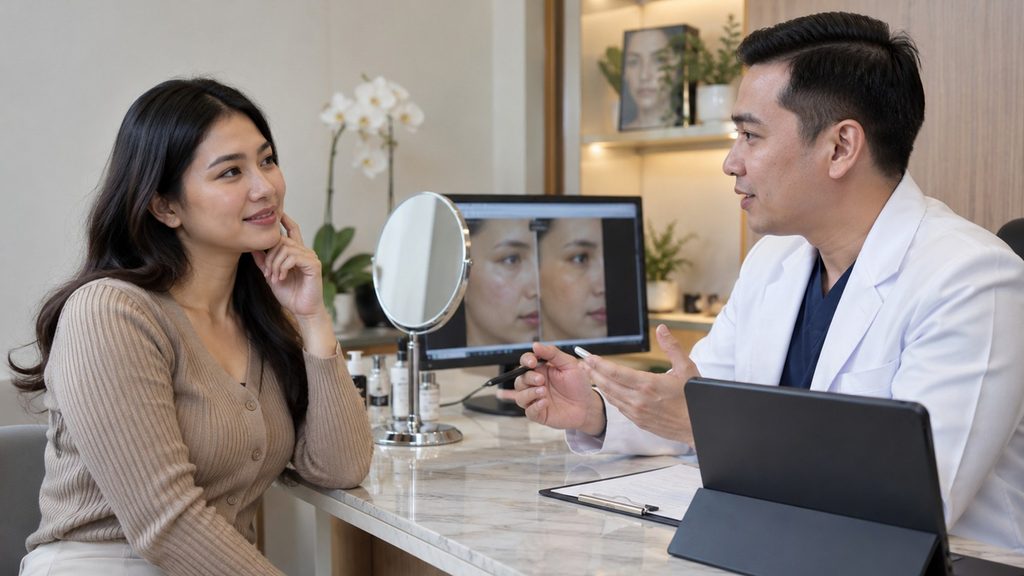
Begin with questions rather than a machine. “What do you think this mark is?” “What else could it be?” “Which part of the proposed session is meant to help?” “What should I do if it becomes darker or irritated?” You do not need to know the terminology before the appointment. The professional explaining the plan should make it understandable.
TaraBliss describes a personalised skin diagnosis as part of its Glow Glass Skin Facial. That can start a conversation about a cosmetic goal and the session’s steps. It does not replace a dermatologist’s diagnosis of melasma or an examination of a new lesion. If you are prone to irritation, mention how your skin reacted to previous peels, acids or light-based treatments before deciding on a facial.
Ask about aftercare too. In Singapore, sun exposure continues after you leave the treatment room. A plan that focuses only on what happens during a session leaves out a substantial part of pigment care. Choose protection you can use consistently, and follow your clinician’s directions if you have a medical treatment.
What if you have more than one kind of mark?
It is entirely possible. A faint patch on each cheek and a few old acne marks may need separate priorities. A good consultation can say, “This facial may address the overall look of your skin, while that changing spot needs a doctor,” or “Let’s deal with the breakouts before chasing their marks.” Clarity can feel less exciting than a dramatic treatment name, but it saves you from asking one session to do three unrelated jobs.
You may also decide the overall unevenness bothers you more than a single freckle. That preference belongs in the discussion. The aim is a more informed choice for your own skin, not a quest to change its natural colour or erase every mark.
What should happen after someone names the mark?
A label is the beginning of the plan, not the plan itself. If a clinician identifies melasma, ask what might trigger it again and how home care and treatment fit together. If the concern is post-acne pigmentation, ask what will prevent fresh breakouts from leaving new marks. If a spot is uncertain, the sensible next step may be to examine it more closely before any cosmetic procedure.
You should also know what a proposed treatment cannot do. A brightening facial may make the overall complexion look fresher without clearing a specific patch. A medical treatment may require maintenance. A patch may respond slowly. Those answers are not disappointing when given before you spend money; they help you decide whether the plan matches your priorities.
Bring your current products to that conversation, even if it is only a photograph of the labels. It is easier to build a sensible routine when the professional knows what your skin is already meeting every morning and night.
Frequently Asked Questions
Can I identify melasma from a selfie?
A photo may help you show a clinician how a patch has changed, but it cannot establish the diagnosis. Several types of pigmentation can overlap.
Are age spots caused only by age?
No. Sun exposure is a major factor behind the small spots often called age spots. Have a new or changing spot examined rather than naming it yourself.
Why do my acne marks keep appearing?
If breakouts or irritation continue, new post-inflammatory marks can follow. Ask about treating the underlying acne as well as the marks.
Will a brightening facial treat every type of pigmentation?
No. Ask what the actual session can do for appearance and when a dermatologist’s assessment is needed. Avoid a blanket promise for all dark spots.
What if a spot changes or bleeds?
See a qualified clinician before any cosmetic treatment. A facial cannot determine whether a changing lesion is harmless.
Choose the conversation before the treatment
A more even-looking complexion can be a lovely goal. Give it a better starting point by describing the marks you see and how they arrived. If a cosmetic facial is appropriate, explore TaraBliss’s Glow Glass Skin Facial and ask how its steps fit your skin. For an uncertain or changing spot, begin with medical advice.