Your skincare routine has not changed. Your skin has. If a familiar cleanser now leaves your face tight or makeup settles differently around your mouth, the menopause transition may be part of the story.
Key Takeaways
- Changes in oestrogen can affect skin moisture and structure, but every woman’s experience is different.
- Dryness, sensitivity, acne and a softer facial outline can overlap. They do not all need the same response.
- If a product that once felt comfortable now stings, make the routine gentler before adding stronger “anti-ageing” steps.
- A facial can address a defined cosmetic goal; persistent itching, rash or other worrying symptoms need clinical advice.
The first clue may be a small one. Your moisturiser disappears into your cheeks by midmorning. Foundation catches around your nose. A serum you used to love suddenly feels too strong. Then a photograph makes your face look different, and you wonder whether all of it is happening at once.
For many women, perimenopause and menopause are not a single event but a period of change. KK Women’s and Children’s Hospital includes dry skin and sleep difficulties among the symptoms women may experience. Hormones are part of the skin story, but they are not the only characters. Sun exposure, ordinary ageing, products and medical conditions still matter. The useful question is what your skin is doing now.
A quick guide to the changes you may see
| What you notice | What may be relevant | First conversation |
| Tight skin after cleansing | Dryness or a changed tolerance | Can the routine be gentler? |
| Fine lines seem clearer | Surface dryness and age-related change | What can moisture reasonably improve? |
| A softer facial outline | Skin and underlying tissue changes | Is this a cosmetic or clinical question? |
Why does menopause affect your face?
Oestrogen helps support skin moisture and structure. As levels change, the surface may feel drier and fine lines may look clearer. Singapore dermatologists speaking to CNA Lifestyle also discuss changes in collagen, elasticity and, for some women, acne during the transition.
That can make the change feel abrupt. You notice that makeup no longer sits the same way, or the skin around your jaw looks softer, and suddenly all the small differences have a name. But your face has not transformed on the day your periods changed. Different factors can become visible together. A dry surface may exaggerate fine lines; a change in contour involves deeper tissues too.
This is why one product labelled “menopause skin” will not automatically answer every concern. It may be excellent for comfort and still have no effect on cheek volume. It may make your face look more luminous while a persistent rash needs medical attention. Be specific about the part that bothers you.
What helps when your usual routine starts to sting?
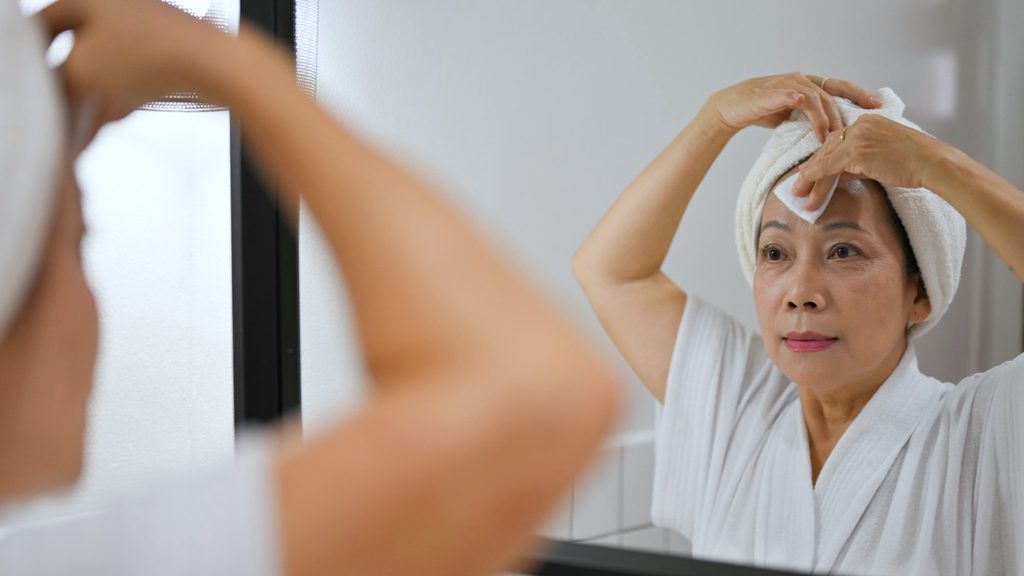
Begin with the step your skin meets first. If washing leaves it tight, consider a milder cleanser and avoid scrubbing. Apply a moisturiser you tolerate, and keep sun protection workable in Singapore’s climate. If a strong acid, retinoid or fragrance suddenly burns, pause it and seek advice instead of trying to “push through” in pursuit of firmer skin.
You do not have to replace your entire bathroom shelf in one weekend. Change one product at a time and notice how your skin responds. A simpler routine can be a sophisticated choice when it gives your face room to feel comfortable again.
If the irritation does not settle, if you have persistent itching or a rash, or if a skin change worries you, see a clinician. Menopause can be relevant without explaining every symptom. A medical assessment can stop you spending months trying increasingly strong products for a condition that needs another kind of care.
Can a facial help you feel more like yourself?
It can be lovely to book time for a treatment that makes your skin feel cared for. If dryness is the main concern, ask how the session supports comfort. If you want a fresher-looking finish, ask what is likely after one visit and what may be temporary. If your concern is a changing facial shape, a moisturising facial cannot restore lost volume, and a different consultation may be useful.
TaraBliss has a menopause-focused treatment overview and an existing article on mature skin. Treat those pages as a starting point for questions about the actual treatment components. Do not assume that a facial can alter hormone levels or medically treat menopausal symptoms, whatever broad wording appears on a treatment menu. Ask how the session would be adapted for your skin now.
Tell the therapist about recent procedures, prescription products and areas that have become reactive. You can also say what you would like from the experience: a gentle appointment, help with texture or simply a clear explanation of your options. Personal care begins with listening.
What if your priorities have changed too?

Perhaps you no longer want to chase every line. You may care more about your face feeling comfortable at the end of a workday. Or you may want to look refreshed in photographs without trying to look like someone else. There is no standard menopause beauty goal.
Give yourself permission to make a plan around the woman you are now. Keep what works in your routine, change what no longer suits your skin and seek the right kind of help for a persistent symptom. The hormonal transition may explain part of the change, but your preferences still decide what is worth doing about it.
How do you prepare for a useful consultation?
Bring the everyday details. Tell the therapist or clinician whether your face feels tight immediately after cleansing or only later under office air-conditioning. Mention a product that used to feel fine but now stings. If you have had a procedure recently or use a prescription, say so before any facial steps are chosen. These details make a more personal plan possible.
You can also separate what you see from what you feel. “My cheeks feel dry” is not the same as “My cheeks look flatter.” The first may call for comfort and moisture; the second may lead to a conversation about facial structure and the limits of a cosmetic service. If both are true, they can be addressed in a sensible order.
A good consultation should not make you feel that every change is an emergency or that you need a package to be doing menopause well. Ask what is most useful now, what can wait and which symptom belongs with a doctor. That is a practical form of reassurance.
If you are also dealing with hot flushes or broken sleep, tell your healthcare professional. Those experiences may affect how manageable your routine feels, but a facial cannot treat them. A shorter, more comfortable skincare plan may be exactly what you can sustain through this period. It is perfectly reasonable to prioritise that over chasing a dramatic result.
Frequently Asked Questions

Does menopause make everyone’s skin dry?
No. Dryness is reported during menopause, but experiences vary. A persistent symptom can have other causes and deserves assessment when it troubles you.
Can my skin change during perimenopause?
Yes. Changes can be noticed before periods stop altogether. Do not assume every new rash or breakout is hormonal, however.
Should I stop using retinoids?
That depends on your skin’s tolerance and medical context. If a product now irritates you, pause it and discuss the routine with a qualified professional.
Will moisturiser lift a softer jawline?
It can improve dryness and make surface lines look softer. It cannot replace lost facial volume or reposition deeper tissues.
When should I see a doctor?
Seek advice for persistent itching, rash, sudden or worrying skin changes, or symptoms that interfere with daily life.
Let your present skin lead
Your face does not owe you the same response to a product forever. If you want to explore a facial, look at TaraBliss’s menopause skin options and ask what the particular session can realistically do for the concern you have today. For ongoing symptoms and medical decisions, speak to a clinician.