The spot on your chin is not the whole story. Your skin may also feel drier, react more easily and hold on to marks long after a breakout settles. Midlife acne asks for a more thoughtful plan than simply buying a stronger face wash.
Key Takeaways
- Breakouts can continue or begin in your 40s and 50s. Hormonal change may be one factor, but it is not the only possible cause.
- Drying out your whole face can leave the skin around a spot uncomfortable without solving recurring acne.
- A flat dark mark after a breakout is different from an active spot or a scar. Describe which concern you want treated.
- Painful, persistent or scarring acne deserves a dermatologist’s assessment.
There is something particularly unfair about getting a chin breakout while you are also looking for a moisturiser that makes your skin feel less tight. The products marketed for acne can sound like they belong to your teenage years; the ones for mature skin may feel too rich. Neither shelf quite describes the face you are living in.
Singapore dermatologists interviewed by CNA Lifestyle explain that adult acne can appear well beyond adolescence and has several possible influences. Hormonal shifts, products, stress, medication and underlying conditions may all matter. That makes the pattern more useful than the assumption that one chin spot must mean a “hormone imbalance.”
A quick guide to midlife breakouts
| What you notice | Why it matters | Next step |
| Recurring chin spots | Pattern may help an assessment | Record timing and severity |
| Dryness around breakouts | Harsh products may irritate surrounding skin | Keep care gentle |
| Flat marks after spots | Inflammation can leave pigmentation | Treat ongoing acne too |
Why can acne arrive with dry or sensitive skin?
Hormones can affect oil production and breakouts around the menstrual cycle and through perimenopause. CNA Women’s discussion with a Singapore dermatologist explains why adult women may continue to experience hormonally influenced acne. But the rest of your face may be feeling drier or less tolerant of harsh products at the same time.
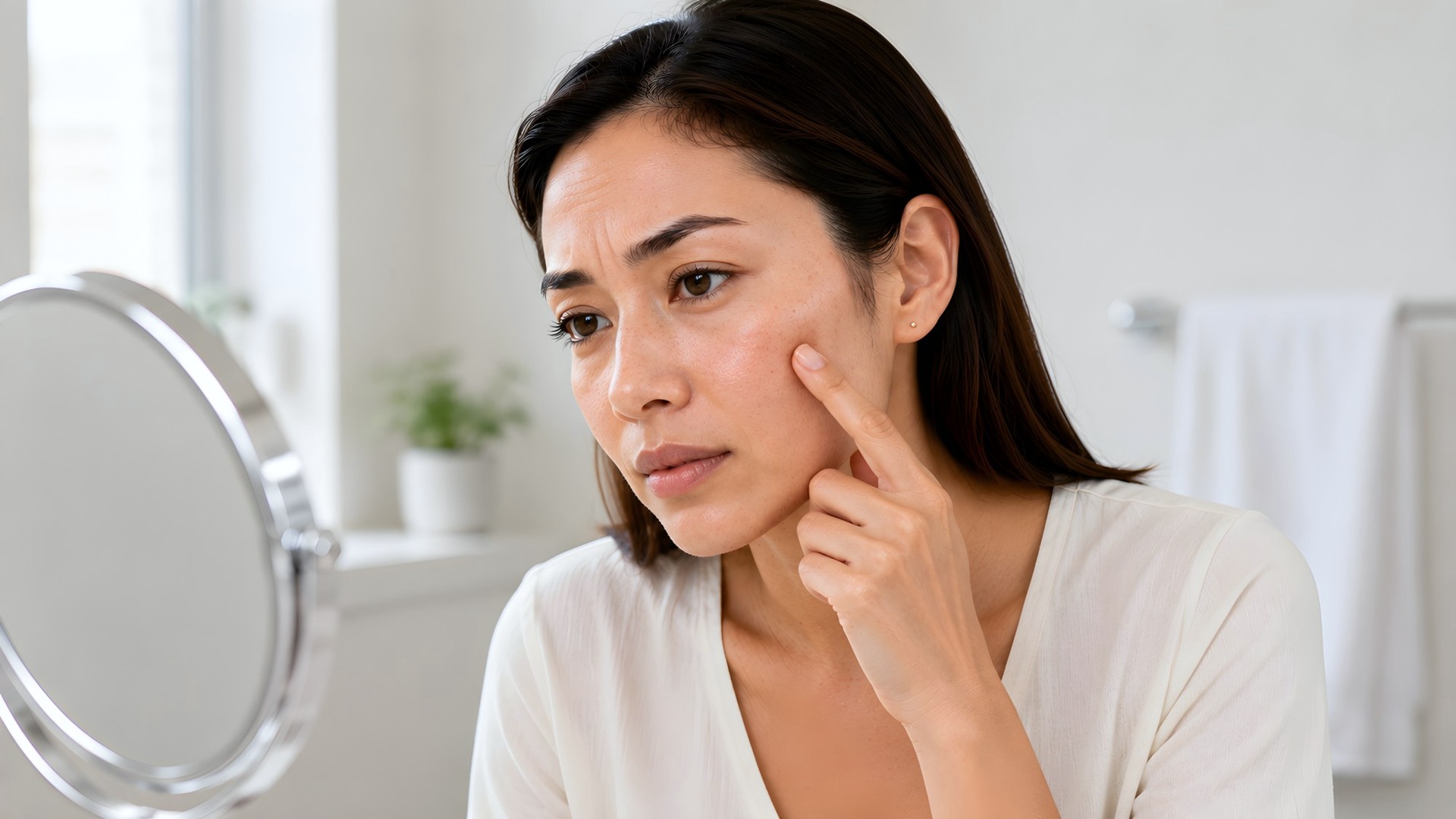
That is the combination that catches so many women out. You want to calm the spot, so you scrub more thoroughly or use a drying treatment everywhere. Then the cheeks sting and the spot still returns. The answer may involve a targeted acne plan and gentler care for the surrounding skin, not treating the entire face as though it were oily.
Notice what happens before a breakout. Does it follow a similar rhythm each month? Did it start after you changed products? Is the spot deep and painful, or are you seeing small clogged pores? Those observations can help a clinician investigate. They do not replace a diagnosis, and they certainly do not mean you have failed to cleanse properly.
What is the mark left behind telling you?
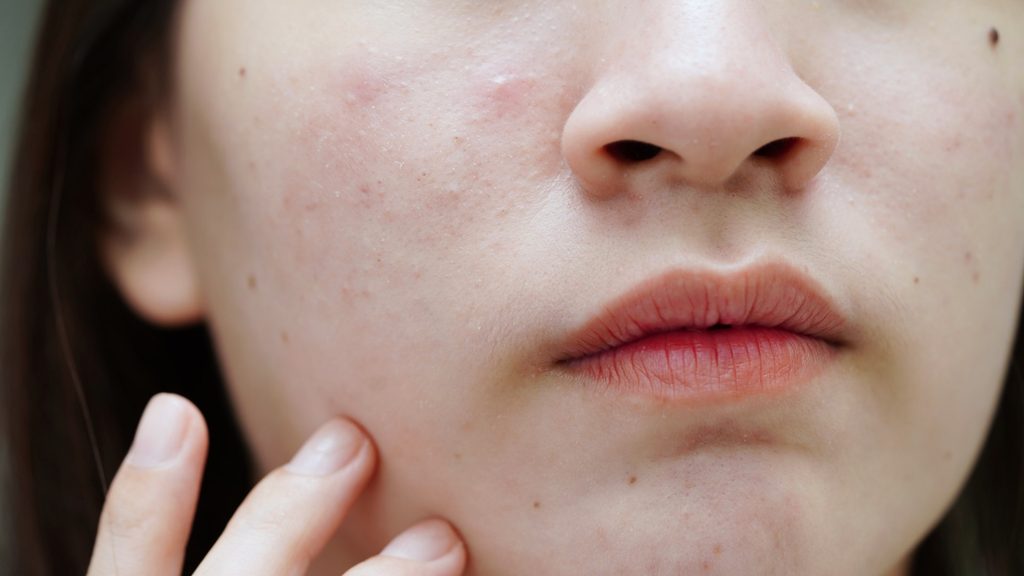
A pimple can disappear while a flat red or brown mark remains. That is not the same as an active lesion. A change in the skin’s texture may be a scar, which is different again. If you ask a provider to treat “acne scars” when you mean flat marks, you may end up discussing the wrong service.
If breakouts continue, new marks can appear while old ones fade. Preventing or managing the acne is part of caring for the complexion you want. Do not pick a healing spot if you can avoid it, and keep sun protection practical. A dermatologist can help with persistent pigmentation, scarring or a pattern of acne that does not settle.
How do you care for the spots without stripping your face?
Start with a cleanser that does not leave your skin tight. Moisturise where you need comfort, and use an acne treatment suited to your skin and history rather than stacking several strong actives at once. If a clinician has prescribed treatment, follow that plan and ask what to do if irritation develops.
You may still wear makeup. Choose products you tolerate and remove them gently. The goal is not to prove how little product your face can survive on; it is to create a routine you can live with while the acne is being addressed. In a busy Singapore day, an elaborate rescue regimen is unlikely to help if it makes every morning harder.
Give a change enough time to understand its effect, but do not wait through painful cysts, scarring or worsening symptoms. A dermatologist can assess whether medication or another medical approach is appropriate.
Where might a facial fit?
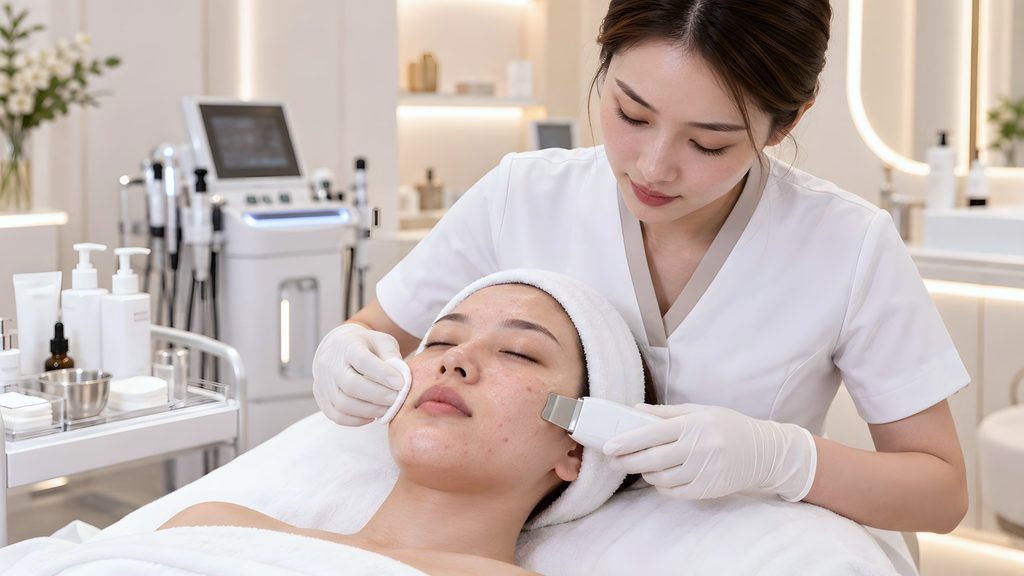
A facial can offer a skin assessment and a cosmetic treatment experience. It should be chosen around the state of your skin that day. Tell the therapist about active, inflamed spots, sensitivity, prescribed products and any recent procedure before extraction or exfoliation is considered.
TaraBliss’s Cell Plasma Reset information describes a facial aimed at acne-prone skin, with consultation and several treatment steps. Ask what is included in your proposed session and whether it is suitable during a flare. It is a cosmetic service, not a cure for a hormonal condition or severe cystic acne. If the latter is your concern, medical advice comes first.
You can also decide that the most helpful facial right now is a gentle, comfortable one, or that you want to postpone it until a painful breakout settles. A thoughtful treatment plan should make room for those choices.
What makes a midlife acne plan realistic?
It should make room for your whole face, not just the spot you can see today. A clinician may suggest a targeted treatment for the acne while you keep cleansing and moisturising gentle elsewhere. Ask how long to give the plan, which reactions are expected and when to call back. You should not be left wondering whether stinging means the treatment is “working.”
It also needs to fit your life. If a routine requires several new products every morning before a commute, you may struggle to keep it up. Ask which steps matter most and which can be introduced later. The point is steady care, not a perfect shelf.
If you are tempted to book a facial before a big event, explain the timing and the state of any inflamed spots. A therapist should be able to tell you whether the planned extraction, exfoliation or device step is suitable, needs adapting or should wait. An appointment that respects your skin is more valuable than completing every step on a menu.
There is no need to wait until the acne becomes severe before asking for help. If it is bothering you, a dermatologist can discuss the pattern and the options available. You can then choose whether a cosmetic facial adds something you enjoy, with a clearer idea of what it will and will not address.
Frequently Asked Questions

Is acne in my 40s always hormonal?
No. Hormonal shifts can contribute, but products, medication, stress and other conditions may also be relevant. A clinician can assess persistent acne.
Should I stop moisturising when I break out?
Not necessarily. Dry or irritated areas may still need a moisturiser that suits your skin and acne treatment.
Can a facial stop hormonal acne from returning?
Do not expect a cosmetic session to change your hormones or prevent every future flare. Ask what the actual facial addresses.
Why do spots leave dark marks?
Inflammation can leave post-inflammatory pigmentation. If new spots keep appearing, discuss the acne and the marks as separate but connected concerns.
When should I see a dermatologist?
Seek assessment for painful, scarring, persistent or distressing breakouts, or if your current approach is making the skin worse.
Make room for the whole face
A breakout deserves attention, but so does the skin around it. Begin with the pattern, keep your routine comfortable and bring in medical advice where needed. If a cosmetic appointment appeals to you, explore TaraBliss’s Cell Plasma Reset facial and ask how its steps fit your skin today.