
Forget the dumbbells. The latest conversation in non-invasive beauty is about the muscles beneath your skin. But “Face Gym” can mean several things, and the method behind the name matters far more than the name itself.
Key Takeaways
- Face Gym might mean massage, exercises you do yourself or a device that stimulates muscles. Ask which one is being offered.
- A controlled study found a measurable change in one cheek muscle after repeated use of a specific electrical device. It did not test a single spa visit.
- EMS and face yoga work differently. Evidence for one cannot be borrowed to promise results from the other.
- If you are considering an electrical treatment, ask about the device, sensation, suitability and realistic result before booking.
We spend so much time thinking about the skin on our face. We cleanse it, moisturise it, protect it from the sun and occasionally buy a serum that promises to make it look firmer. Yet the muscles involved in smiling, laughing and raising an eyebrow rarely enter the conversation.
That is part of Face Gym’s appeal. It asks a compelling question: if we can exercise the rest of our body, could we do something similar for our face? The answer is more interesting than a quick before-and-after clip suggests. Facial exercises, massage and electrical muscle stimulation are different experiences, with different evidence behind them.
A quick guide to Face Gym methods
| Method | What it involves | What to verify |
| Facial exercises | Voluntary movement | What evidence supports the promised result? |
| EMS facial | Electrical muscle contractions | Which device and protocol are used? |
| Other device facial | A different technology | Is this the method studied or advertised? |
What exactly happens in an EMS facial?
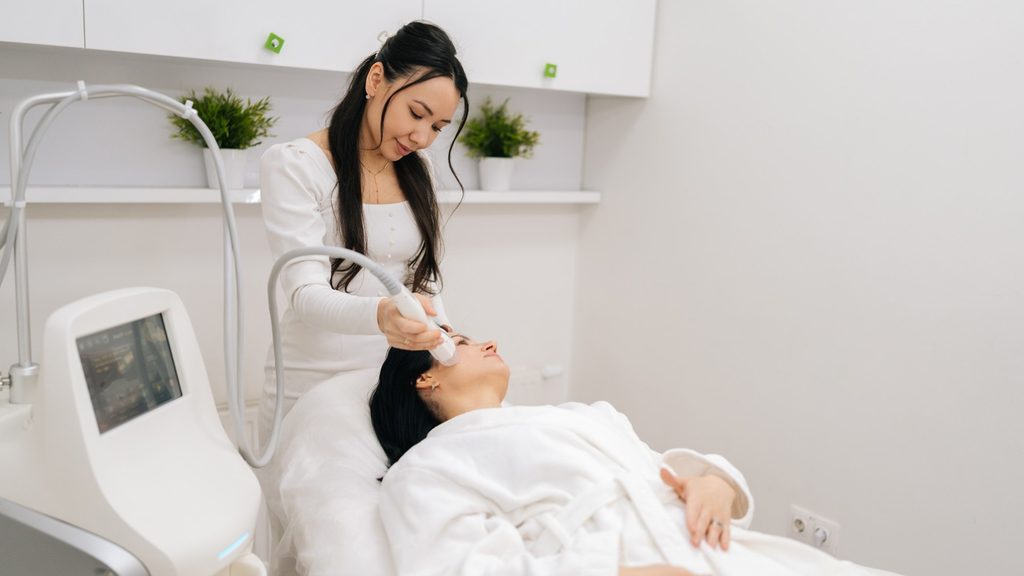
EMS stands for electrical muscle stimulation. A device sends controlled electrical pulses that prompt a muscle to contract without you deliberately making an expression. You might feel a rhythmic pulsing or a stronger contraction, depending on the device and its settings. It is quite different from massaging your cheeks or practising face yoga in front of a mirror.
The details matter. Where the device sits, how strong the stimulation is and how often the treatment is repeated all affect what is being tested or offered. A more intense sensation is not proof of a better outcome. If a spa describes the result as a “lift”, ask whether it means a temporary change in appearance, a measured change in muscle or something else.
Face Gym is a beauty label, not a technical specification. The current TaraBliss Face Gym listing describes a light and heat based treatment in its men’s facial category. It does not establish that a women-facing EMS session is available. The team would need to confirm the current method before you could compare it with EMS research.
Can electrical stimulation make a face look firmer?
Here is the science that makes the subject worth discussing. In a randomised trial involving 108 women, participants assigned to a particular facial neuromuscular electrical stimulation device used it for 20 minutes, five days a week, over 12 weeks. Ultrasound measurements found an average 18.6% increase in the thickness of a cheek muscle called the zygomaticus major in that group, while the untreated group did not show the same change. Participants also reported a firmer-looking face.
That is a real finding, with an important boundary. The study tested one device on a repeated schedule. The appearance ratings came from participants, and the trial did not establish what a different device or a single salon session would do. A separate Japanese study of a small group using another device offers further interest in the area, but it cannot turn every Face Gym treatment into a clinically proven lift.
The beauty takeaway is simple: there is reason to study facial muscles, and reason to ask better questions of any treatment that claims to stimulate them. “Is this the device used in the research?” is a useful start. So is “How many sessions were involved?”
Is face yoga the same thing?

No. Face yoga asks you to move your muscles consciously. EMS uses electrical pulses. Massage works through a therapist’s hands. They may all feel enjoyable, but a study of one method cannot answer for another.
A Singapore dermatologist quoted by CNA Lifestyle on face yoga explains that facial exercise cannot change bone structure or significantly reduce facial fat. A sharper-looking face immediately after a session may reflect temporary puffiness, lighting or pose. That does not mean you cannot enjoy a ritual for how it feels. It does mean you should know what kind of change it can reasonably offer.
If your cheeks have lost fullness or your jawline has changed because of deeper tissue shifts, no facial workout should be sold as a replacement for a medical assessment. Skin, fat, bone and muscle all contribute to the way a face ages.
What should you ask before a session?
Start with the obvious, even if it feels too simple: “What will actually happen during my appointment?” Ask whether an electrical device will touch your face, how the intensity is adjusted, who should avoid the treatment and what you might notice after one visit. An answer you can explain to a friend afterwards is more useful than a string of technology names.
Tell the provider if you are pregnant, have an implanted electronic device, have broken or irritated skin, or recently had a facial procedure. The suitability rules belong to the actual device and your medical circumstances. If you have a pacemaker or another implanted device, speak to your treating clinician before considering electrical stimulation.
And ask about cost before discussing a course of sessions. You may decide that a pleasant treatment with a subtle effect is worth it. If you are paying for a sustained change, ask how the result would be measured and what evidence applies to that exact protocol. The smartest beauty decision is the one you understand.
When does a beauty trend become a treatment decision?
An entertaining face-workout video asks very little of you. A booked session asks for your time, money and trust. That is the moment to shift from “This looks interesting” to “Show me the method.” The provider should be able to tell you whether the facial involves massage, voluntary movement, electrical stimulation or a different device altogether.
If the answer changes halfway through the explanation, pause. A treatment can be enjoyable without carrying the weight of a clinical study, but the two should not be blurred. Curiosity is a lovely reason to enquire. It is not a reason to accept a promise you cannot trace to the appointment you will actually have.
Frequently Asked Questions

Is Face Gym just another name for EMS?
No. It can refer to massage, voluntary facial exercises or device-based treatments. Ask the provider for the actual method.
Does the 108-woman study prove a spa facial works?
No. It tested a specific device for 20 minutes on five days a week over 12 weeks. It cannot predict a result from one visit or another device.
Will facial muscle stimulation replace a facelift?
No. Electrical contractions do not surgically reposition skin and deeper tissue. Compare a treatment with the concern you have, not with surgery.
Can I try EMS if I have a pacemaker?
Do not assume it is suitable. Check the device’s instructions and speak to your treating clinician before booking any electrical treatment.
Does TaraBliss currently offer EMS Face Gym for women?
The public Face Gym page describes a light and heat based treatment under men’s facials. Ask the team whether a separate women-facing EMS service exists and what it involves.
The final word on Face Gym
Facial muscles deserve a place in the beauty conversation. The research is interesting, and the idea of a face workout is undeniably appealing. Just keep the curiosity attached to the method: which device, which schedule, which result, and for whom?
If you would like to explore TaraBliss’s current options, contact the team with your own concern and ask them to explain the available method. An informed conversation is a better beginning than a promise borrowed from someone else’s before-and-after photograph.